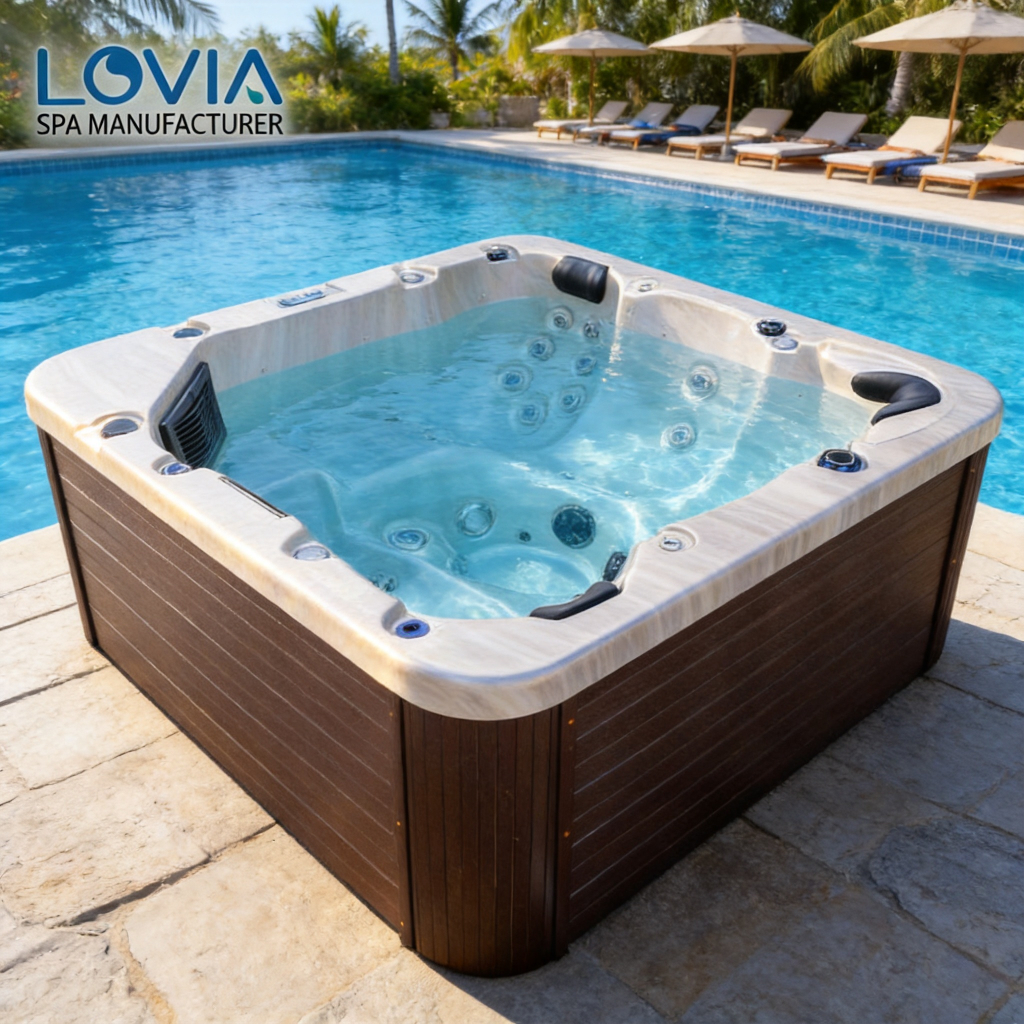


Mogu li kupci kupiti vanjske spa centre iz tvornica u malim količinama?
2026-10-09 15:30Ovi se zahtjevi ocjenjuju na temelju složenosti dizajna, dostupnosti materijala i rasporeda proizvodnje.
Prednost ovog modela je što kupci izbjegavaju prekomjerne početne troškove razvoja, dok proizvođači mogu učinkovito alocirati resurse na temelju stvarnih uvjeta proizvodnje.
Za mnoge inozemne brendove, ovaj kolaborativni pristup bolje se usklađuje s obrascima rasta tržišta. Novi brend obično napreduje kroz tri faze - testiranje tržišta, širenje prodaje i uspostavljanje kanala - a razina podrške dobavljača izravno utječe na stopu rasta brenda.
Currently, an increasing number of outdoor spa buyers fall into the following categories:
The first category consists of regional distributors.
Many overseas distributors wish to act as agents for outdoor hot tub brands but lack insight into local consumer preferences during the initial stages of entering a new market. For instance, requirements regarding size, color, and functional configuration vary across European countries; the North American market prioritizes massage functions, thermal insulation, and smart controls; while the Australian market places greater emphasis on outdoor weather resistance and safety standards.
If distributors initially purchase large quantities of a single model, they risk facing an unbalanced inventory structure.
Therefore, purchasing small batches—such as five or ten units, or a limited assortment of products—allows distributors to quickly test the market.
The second category consists of entrepreneurs launching new brands.
In recent years, the rise of independent online stores, e-commerce platforms, and social media marketing has drawn more entrepreneurs into the outdoor lifestyle products market. While they may possess strong marketing capabilities, they often lack access to traditional manufacturing resources.
For these clients, purchasing large quantities of outdoor spa equipment at the outset is impractical. They prefer to start with a small number of units to showcase their brand and gather customer feedback before gradually scaling up their procurement.
The third category comprises buyers for specific projects.
Boutique hotels, private clubs, and high-end residential developments do not necessarily require large volumes of equipment; instead, they need a limited number of high-quality outdoor spa units that align with their specific design requirements.
These clients prioritize product quality, delivery timelines, and the supplier's ability to collaborate effectively over simply securing the lowest price.
Consequently, small-batch procurement is becoming an increasingly important purchasing model within the outdoor spa tub industry.
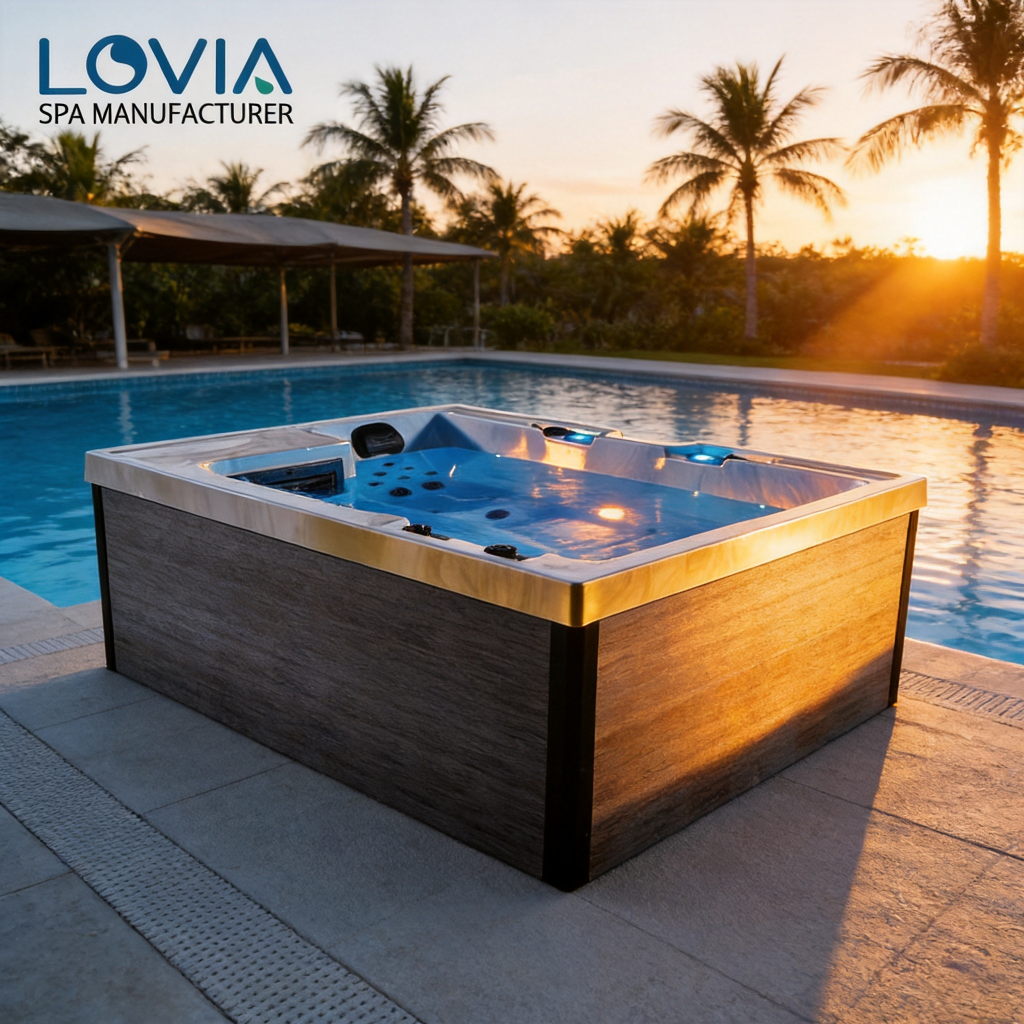
Why has it historically been difficult to accommodate small-batch orders for outdoor spa equipment?
Despite the growing market demand for small-batch procurement, the manufacturing of outdoor spa equipment involves specific production complexities.
Unlike standard consumer goods, outdoor hot tubs are large, complex products. A complete unit typically comprises:
•Acrylic shell;
•Insulation structure;
•Water circulation system;
•Heating system;
•Massage jets;
•Control system;
•Electrical safety components;
•Filtration equipment.
The manufacturing process generally involves multiple stages:
Raw material preparation → Shell molding → Reinforcement → Plumbing installation → Electrical connection → Functional testing → Final unit inspection → Packaging and shipping.
Many of these stages entail fixed costs.
For example, producing a new outdoor hot tub model requires advance preparation of:
•Molds;
•Production process parameters;
•Material supplies;
•Assembly procedures;
•Testing standards. If order volumes are too low, the manufacturing cost allocated to each unit increases.
This is why some manufacturers are reluctant to accept small-batch orders.
However, it is important to note that "difficulty in small-batch procurement" is not an insurmountable problem for advanced manufacturing enterprises.
With the evolution of manufacturing technology, an increasing number of specialized outdoor spa manufacturers are adopting modular designs, standardized production, and flexible supply chain management, making small-batch orders feasible.
For instance, established manufacturers often categorize their products into:
Standard model series;
Semi-custom series;
Full OEM development series.
Standard models, having already undergone design and production optimization, can accommodate more flexible order quantities.
For fully customized products, the Minimum Order Quantity (MOQ) is determined based on development costs and production complexity.
This represents a key distinction between modern outdoor spa manufacturers and traditional production models.
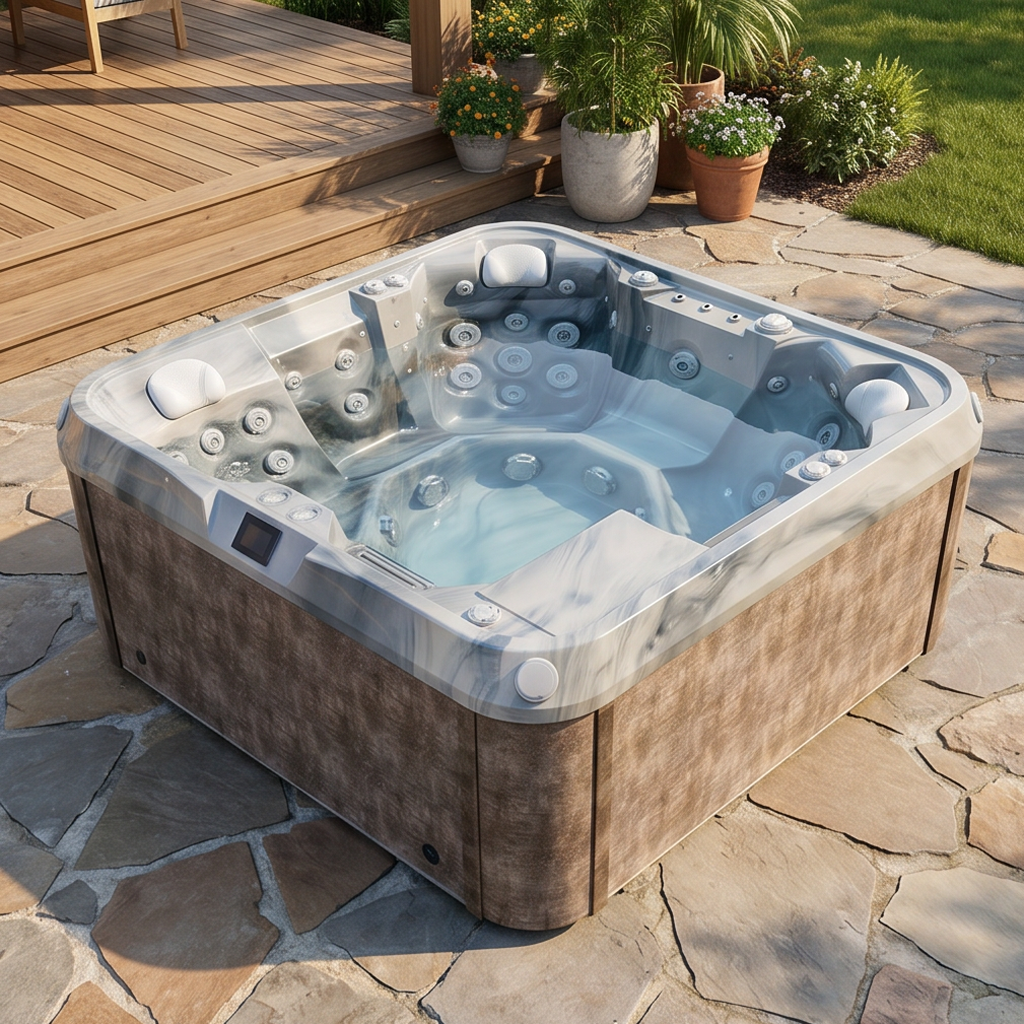
What are the advantages of purchasing outdoor spa equipment in small batches?
For buyers, small-batch procurement is not merely about reducing order volume; it is a market strategy designed to mitigate business risk.
1. Reducing market testing risk
Outdoor spa equipment is a product category heavily influenced by regional preferences.
Consumer demands for outdoor spa tubs vary significantly across different countries.
For example:
Some markets prefer compact, residential-style hot tubs;
Other markets focus more on large swim spas;
Certain high-end clients desire features such as smart controls, advanced lighting systems, and specialized massage functions.
If a buyer lacks local market insight and purchases in large quantities initially, there is a high risk of a mismatch between the product and actual demand.
Small-batch procurement allows businesses to gauge market trends based on real sales data.
2. Reducing inventory pressure and improving capital turnover efficiency
Compared to standard consumer goods, outdoor hot tubs take up significant space.
A single unit may require a dedicated storage area, and transportation costs are relatively high.
Excessive inventory leads to increased:
•Storage costs;
•Capital tied up in stock;
•Product management costs.
For growing enterprises, small-batch procurement frees up capital to invest in market promotion and channel development.
3. Facilitating product adjustments
After the initial purchase of outdoor spa equipment, distributors typically gain access to genuine market feedback.
For instance, customers might indicate that they:
•Prefer specific colors;
•Have a greater need for certain sizes;
•Desire additional features.
If the initial order quantity is small, it is much easier to adjust the product strategy for subsequent orders.
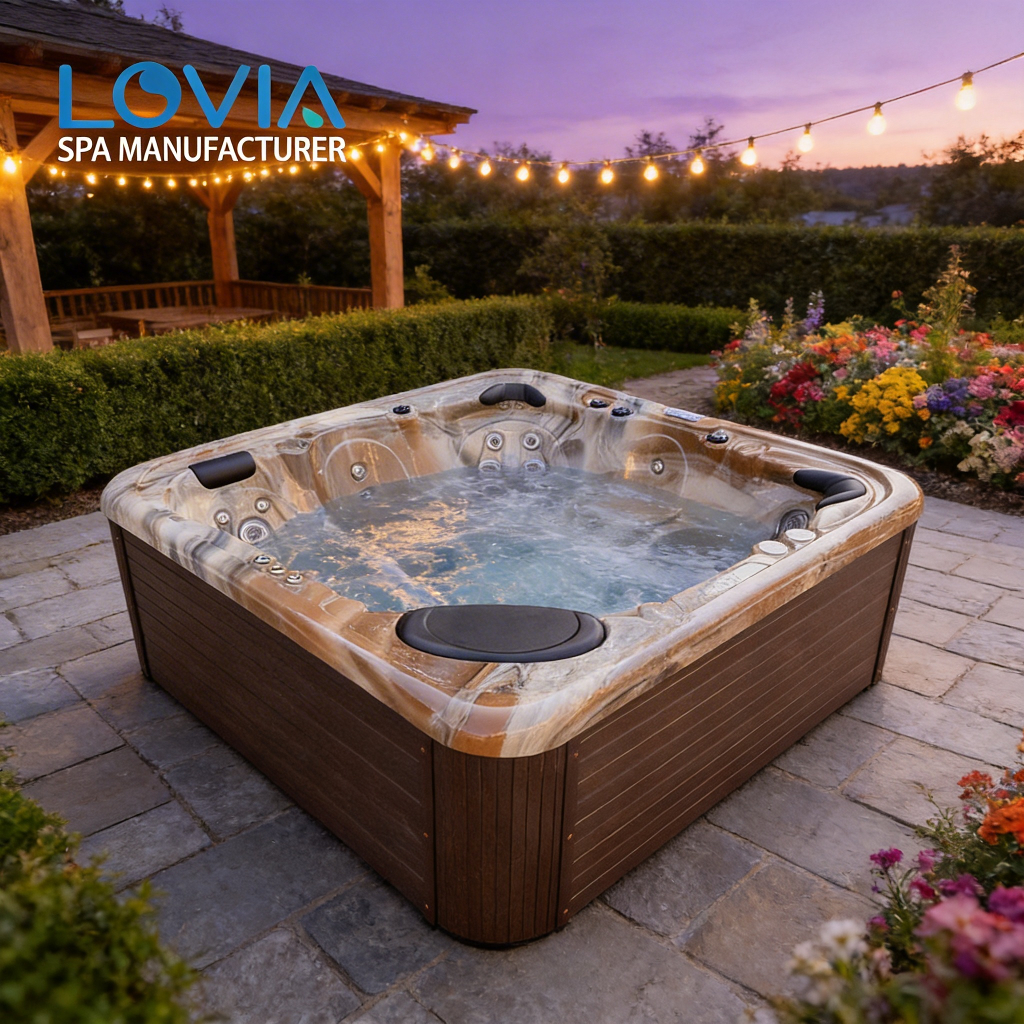
How does LOVIA® meet the needs of buyers looking for small-batch purchases of outdoor spa equipment?
In the international outdoor spa equipment market, clients are at various stages of development. Some are just beginning to establish sales channels and need small quantities to test the market; others have a stable customer base and require continuous bulk purchasing; while some wish to build their own brands and require OEM/ODM partnerships.
Applying a uniform Minimum Order Quantity (MOQ) standard to all clients would fail to meet actual market demands.
LOVIA® has established flexible cooperation models tailored to different client types during the production of outdoor spa equipment.
For standard outdoor hot tub models, LOVIA® supports small-batch purchasing. For instance, the MOQ for standard models can start at just five units; this effectively reduces initial inventory pressure for new distributors entering the outdoor spa tub market.
Unlike suppliers who mandate purchases of dozens or even hundreds of units at a time, small-batch purchasing allows clients to plan their market strategy with greater flexibility.
Moreover, LOVIA® does not simply lower order volumes; instead, it adjusts production based on standardized manufacturing processes. Since standard products benefit from mature designs and optimized production workflows, product consistency is maintained even with smaller order quantities.
For OEM/ODM clients, LOVIA® engages in further consultation based on specific project requirements.
Examples include:
Adding a brand logo;
Adjusting the product's exterior color;
Modifying specific functional configurations;
Developing new product models.
These requests are evaluated based on design complexity, material availability, and production scheduling.
The advantage of this model is that buyers avoid excessive upfront development costs, while manufacturers can allocate resources efficiently based on actual production conditions.
For many overseas brands, this collaborative approach aligns better with market growth patterns. A new brand typically progresses through three stages—market testing, sales expansion, and channel establishment—and the level of supplier support directly impacts the brand's growth rate.